
Account management built around commercial master data
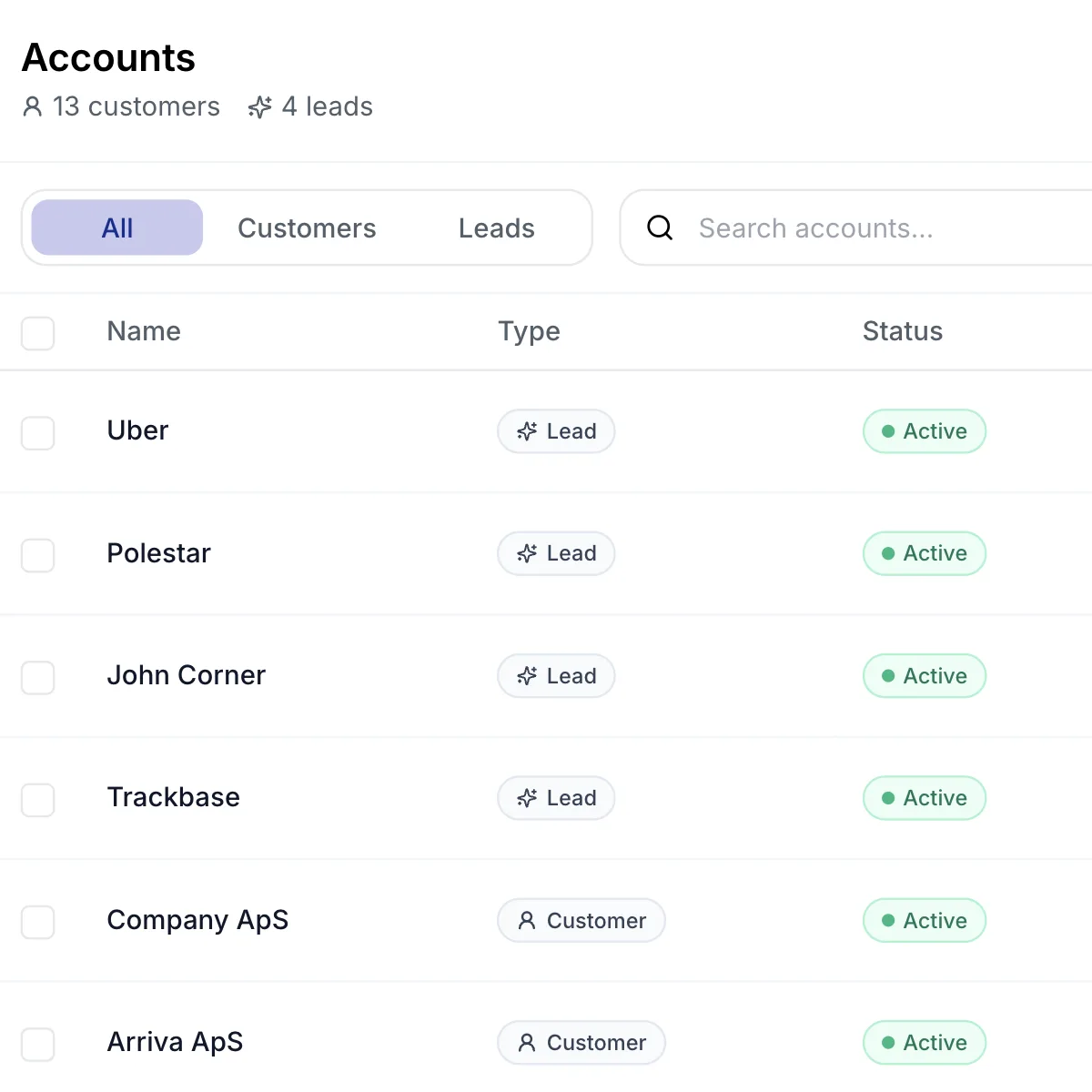
Keep customer and lead profiles, contact details, notes, currency, account type, groups, tags, price books, and order history together in one searchable account layer.
Product map
Account management
Product map
Account management
Account master data
Account management gives teams a shared commercial source of truth for company and contact profiles, references, price books, and recent order context that other workflows can depend on.
Feature
Account management
Designed for teams that need account records to carry real commercial context rather than only basic CRM identity fields.
[/1] Profile depth
Company + contact
Customer and lead profiles, contacts, notes, currency, and account type sit together in one searchable layer.
[/2] Pricing context
Linked
Accounts can carry linked price books and customer groups so quoting starts from the right commercial setup.
[/3] Order memory
Recent activity
Recent orders and account history help teams work from current context instead of starting every deal cold.
Account records that do more than store names and emails
Master data becomes more useful when it supports pricing, quoting, segmentation, and pipeline decisions directly rather than sitting in a detached profile view.
Account management in Reforce starts with unified master data for both customers and leads. Teams can maintain company and contact profiles alongside notes, currency, account type, lead tags, customer group membership, and external references instead of scattering that information across tools.
Because accounts also connect to linked price books and order history, the record becomes usable context for CPQ, pricing, segmentation, and pipeline progression rather than just a static CRM profile.
Structured customer and lead profiles
Linked pricing context by account
Recent order and offer visibility
Searchable commercial reference layer
Where account management pays off
Faster quote setup
Reps and operators start from the right commercial context instead of reconstructing profile details each time.
Cleaner internal handoff
Shared account context gives pricing, operations, and success the same commercial picture after the deal moves.
Better account continuity
Renewals and expansion work can build on the existing record instead of rediscovering the account from scratch.
See it in action
Make commercial structure easier to launch
Use Reforce to connect catalogs, configuration, pricing, and customer execution in one workflow teams can actually trust.