
Order pipeline management with offers at the center
Use offers as the commercial workflow hub between CPQ and CRM, whether they start with a sales rep or a storefront request.
Product map
Order pipeline
Product map
Order pipeline
Offer workflow
Quote and order pipeline management treats the offer as the central commercial workflow object between CPQ, CRM, and storefront requests instead of splitting the process across disconnected tools.
Feature
Order pipeline
Designed for teams that need one object to carry lifecycle state, pricing context, proposal output, and commercial outcome.
[/1] Entry point
Multi-source
Offers can start from a sales rep workflow or from a storefront request without changing the core commercial structure.
[/2] Progression
Tracked
Stages move from creation through request, review, proposal, negotiation, and final outcome with a clearer operational history.
[/3] Payload
Preserved
Line items, saved configuration details, pricing, manual adjustments, totals, and pricing status stay attached as the offer progresses.
Offers that connect quoting, progression, and output in one place
The pipeline gets stronger when the offer itself carries the data and stage history needed by sales, pricing, and leadership rather than handing off between fragmented records.
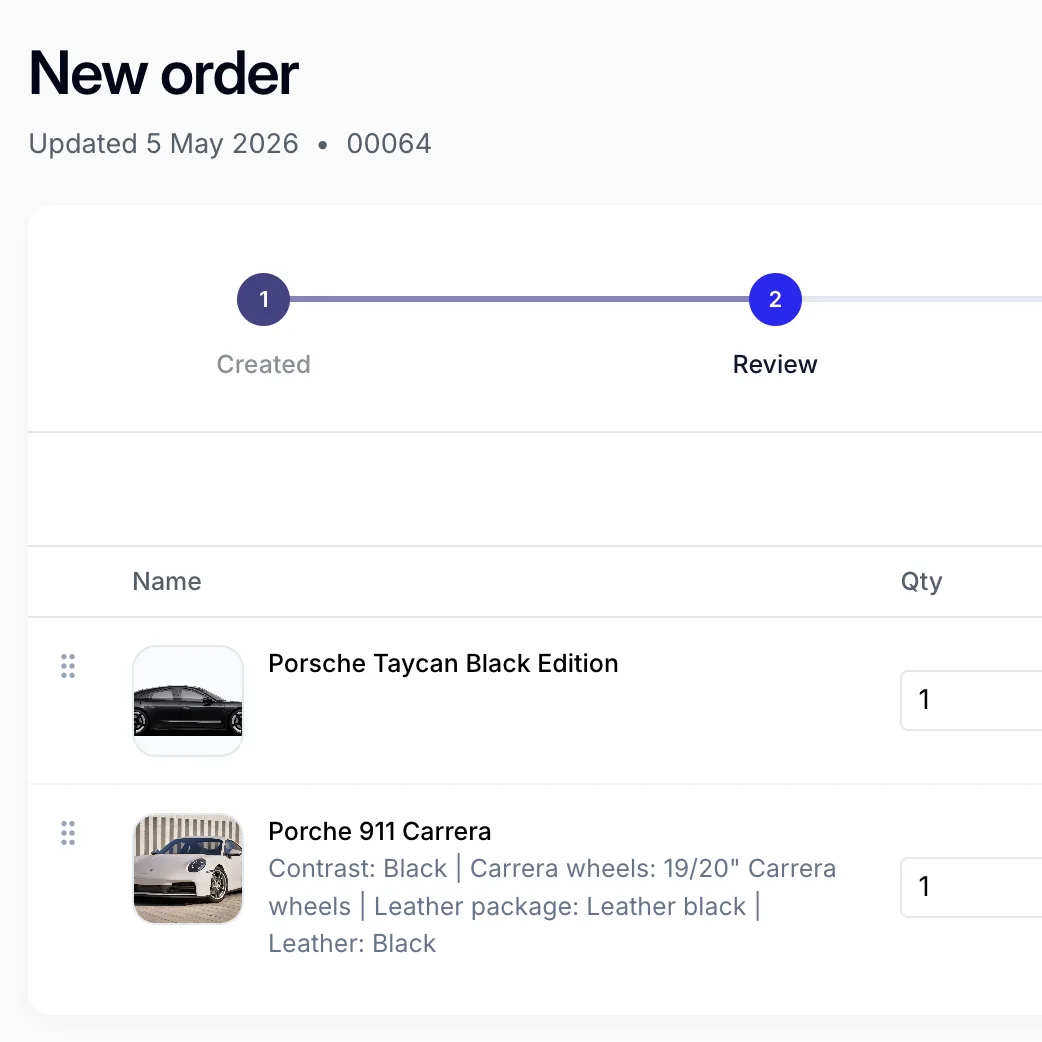
Offers in Reforce are treated as the commercial workflow hub between CPQ and CRM. They can be created directly by sales reps or generated from storefront quote requests, then move through tracked states such as request, review, proposal, negotiation, and final outcome.
Line items, saved configuration details, pricing, manual adjustments, totals, proposal documents, and PDF versions stay tied to the offer so quoting and pipeline management are not split across disconnected systems.
Offer creation from multiple sources
Stage progression from creation to outcome
Pricing, totals, and offer details preserved on the record
Proposal and PDF generation tied to the workflow
Revenue and pipeline tracking from the same commercial object
What this usually helps teams reduce
Pipeline fragmentation
Instead of moving between separate quote, CRM, and approval records, teams progress one primary commercial object.
Proposal rework
Pricing state, line items, and proposal output stay aligned as the offer moves forward.
Outcome ambiguity
Won, lost, and cancelled states remain attached to the same offer history instead of becoming disconnected status updates.
See it in action
Make commercial structure easier to launch
Use Reforce to connect catalogs, configuration, pricing, and customer execution in one workflow teams can actually trust.